
Wattle Hill Journal shares practical, down-to-earth guidance on rural heritage and oast house living in the kent and sussex weald for readers across the UK.
- 0123456789
- Angle Bd Abdelmoumen & rue soumaya, Résidence
- [email protected]
Wattle Hill Journal shares practical, down-to-earth guidance on rural heritage and oast house living in the kent and sussex weald for readers across the UK.
 By Oliver Merriman
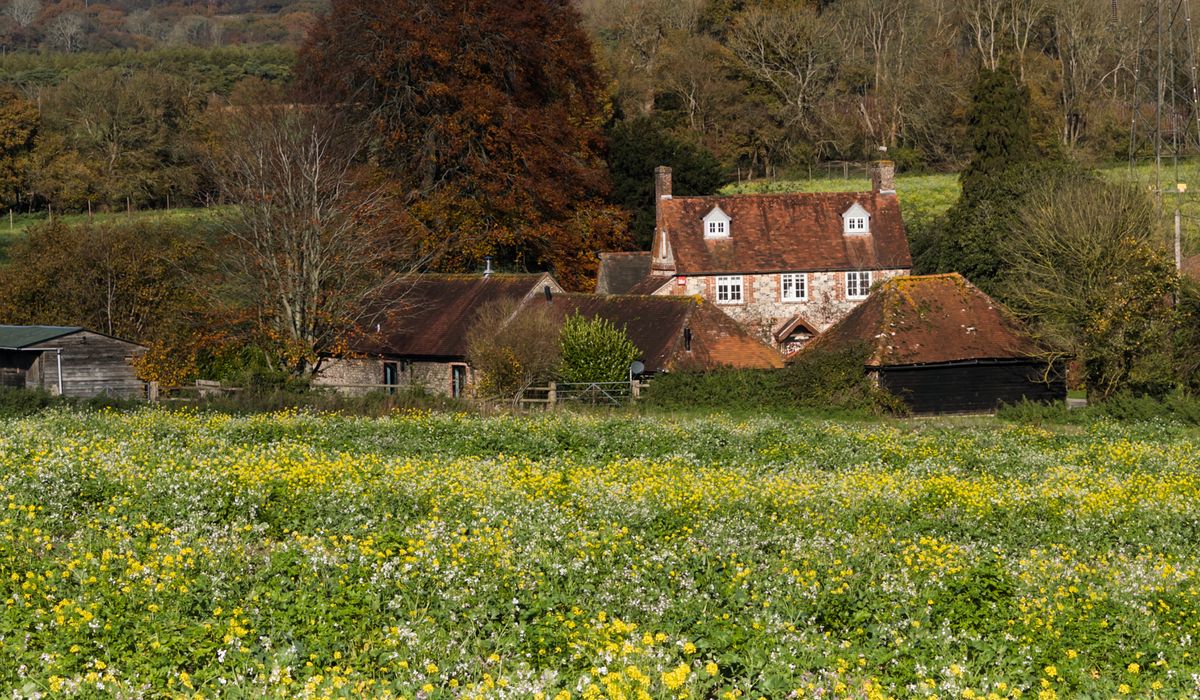
Across the Kent and Sussex Weald, the hop garden was once as familiar as the oak and chestnut woods. Every late August, the bines would be heavy with pale green cones, and the whole countryside seemed to turn towards the harvest. Families arrived from London and from nearby villages, often returning to the same farm year after year. The work was paid by the bushel or by the pocket, and the tally man’s book was the record of a family’s earnings. Oast houses, with their white cowls and conical roofs, stood at the edge of every farm, ready to dry the crop. That seasonal rhythm shaped family life for generations, and in a few corners of Kent it is still remembered in practice, not just in museums.
Traditional picking was slow, sociable and remarkably skilled. A picker would take a hop bine, strip the cones by hand, and drop them into a basket or a bin. The hop bin was often a large wooden or canvas frame, shared by a picking team. A scuppet — a wooden scoop — was used to move hops from the bin into a bushel measure or a pocket. Children helped, grandparents supervised, and the day was punctuated by tea, sandwiches and the cry of the tally man. The tools were simple, but the routine was precise:
A good picker could fill several bushels in a day, but the work depended on the weather. Rain made the bines slippery; heat made the hops brittle. Hand-picking was gentle on the cones, which mattered for Goldings, Fuggles and other traditional varieties grown in the Weald.
Once picked, hops had to be dried quickly. They were spread on a haircloth over the kiln floor, then warmed by a wood, coke or charcoal fire. Some growers used sulphur to preserve the colour, though the practice was always a matter of judgement. The cowl on the oast roof turned with the wind, drawing moist air up through the hops. Drying took several hours, after which the hops were cooled, packed into pockets and sent to market. In the Kentish Weald, round oasts are common; in Sussex, square oasts appear more often. Either way, the oast house was the heart of the farm — warm, dusty and smelling of green hops and woodsmoke.
From the mid-twentieth century, mechanised strippers began to replace hand-picking. Mobile machines were driven to the hop garden, where workers cut the bines and fed them into a stripping mechanism. The machines separated cones from leaves and stalks far faster than any family team. The old hopping holidays faded, and many oast houses fell silent. Yet traditional methods have not vanished entirely. Some small growers still pick by hand for specialty brews, and heritage days in Kent and Sussex keep the baskets, scuppets and bushel measures in use. The machine is efficient, but the hand method remains the benchmark for care.
Converted oast houses are now prized homes across the Weald. The roundel makes a dramatic sitting room, and the cowl still turns above many a kitchen. But oast house living demands respect for the building. Curved walls resist standard furniture, and the conical roof needs regular inspection. Damp can be an issue, so ventilation matters. If you live in an oast, you learn to work with its quirks:
The reward is a home that carries the harvest in its bones. Many owners plant a few hop bines against a south-facing wall, just to see the cones ripen.
The Weald’s hop heritage survives in field patterns, farm names and oast conversions. It survives, too, in the seasonal routines that once shaped family life: the late-summer picking, the tally man’s call, the smell of drying hops. If you want to understand rural Kent and Sussex, visit an oast house in September, watch a hand-picking demonstration, and listen for the stories. The methods may be traditional, but they are not frozen. They are still used, still taught, and still capable of bringing a community together around a bin of green hops.


We are not gonna make spamming
